Monday, January 22, 2007

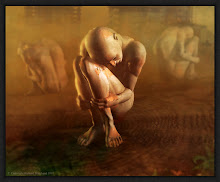
Upon Stained Shallows

I have lost count of the times when I have mentioned how important it is for us to examine ourselves. Repeatedly. The only reason I do it is because we rarely do so. It is so frustrating to see how we almost always tend to look for answers from others. There is this frightening ease with which we point our fingers accusingly to everyone else except ourselves. Even the most ignorant among us seem to be highly skilled at the art of blaming, or maybe their ignorance is their source of the behavior.

It is dangerous to say the least. Not just to ourselves, but to others as well. I wish, at times, that I could grab each person and scream at their faces to just LOOK at themselves for a moment, before they open their mouths or raise their fingers. LOOK at all that they are risking. Why is it so hard for us to just shut up and observe instead? There is so much we can learn, so much we can experience and understand, if we only know how to listen, feel, sense, taste, and hear. We can gain so much more when we listen compared to when we talk. There is so much we can absorb simply by staying quiet and paying attention to everything around us, instead of being so bloody self-absorbed and noticing only ourselves.

Young people seem to be the worse in this sense. Whether it is teens or young adults, we just seem to not care about anything except ourselves. Being selfish is bad enough because it is insensitive and hurtful at times, but looking at it from a deeper perspective, being selfish is quite possibly the worst thing we could do to ourselves. By being selfish, we are hurting ourselves in a really bad way. By being self-absorbed, we are literally cutting off any chance we have of actually LEARNING and GROWING. In other words, we are retarding ourselves. When we forget how to observe, we stagnate.

It is not easy to get rid of that self-absorbency of ours. It is not something obvious; like all such problems, it subtle and insidious. It exists in the little things that we do and say. It shows itself every time we react too quickly at a comment about us, every time we instinctively think of ways to benefit ourselves, every time we channel our anger at someone or something else, and every time we lift that painful finger accusingly. The biggest challenge, which is also the first step in ridding ourselves of this disease, is to hold back. We need to push back that selfish thoughts that crop up, no matter how tempting it might be. Reserving judgment and withholding blame are just as important. The second step, which is relatively easier, is to find peace with ourselves. This is very much the source of ALL our problems; our lack of inner peace. We may think we are angry at a lot of things, that stress is due to a lot of factors, but honestly, there is only one reason. We are angry with ourselves because we are unable to find any peace within. There are too many worries, too many unanswered questions and doubts, and dissatisfaction with what we have. I do not have any solution for this; I only know that it helps me when I tell myself that everything I need is already there and everything else is a bonus. The trick, I guess, is to come to terms with what it means to need something. Sometimes, it is easy to want something so bad that it becomes an apparent need, especially when everyone else has it but we do not.

It is precisely at times like this that we need to really delve deep and figure out what is it we really need. This is the important part; I cannot stress this enough.

THINK ABOUT WHAT YOU HAVE INSTEAD OF WHAT YOU DON'T FUCKING HAVE.

Think about those who DON'T have what you have. Learn to understand the difference between needs and wants and then maybe we might find that inner peace that we lack.

Funny how this post seems so similar to the one before...


Saturday, January 06, 2007

What are we but grown up children with big toys?

Truly, we seem to be just that. Children, clever, yet perhaps lacking any true wisdom. In our hands we hold big toys that wreak mayhem and destruction rather than anything good. The only thing that is different between actual children and the so-called grown ups is that the latter do not have a parental figure to guide and show them the way. No one to tell us what is right and wrong; no one to show us the error of our ways. What we assume to be the order, the way things are meant to be, is merely that; an assumption. We use our toys as means to achieving such ends that only exist in our minds and our assumption based objectives.

There is no absolute truth that we can discern. There are excuses. There are misguided, delusional, and misdirected beliefs; but is there really any way to tell the difference? As far as one can tell, the answer would have to be no. Yet, here we are, with centuries of civilization and progress behind us, still allowing ourselves to be dictated by 'codes' of propriety and 'orders' that are more arbitrary and convenient rather than truly functional and meaningful in a greater context. We are self-serving, more interested in making our own lives more comfortable and pleasurable than anything else. What is convenient is considered good and that is all that matters. We only really care about making things easier for ourselves and finding ways to greater entertainment and pleasure as well as doing whatever it takes to fit in with everyone else. Cost is not relevant; we would do whatever it takes to attain such a state. At the very core of this reality is our selfish tendencies.

We seem to be consumed by this behavior of selfishness. Some even take the stand that it is our inherent nature to be selfish; to want things for ourselves. The concept of property and ownership stems from the very fact that we belief that it is our right to horde. Our gods might be different, our religions and faiths equally so, but central to every one of these things is the fact that they are all focused on serving our own peculiar individual needs. We do not see a problem or an issue unless it directly involves us; otherwise it is somebody else's problem and we simply could not care less. As long as our own comfort and security is not affected, as long as our homes are not violated, to hell with the rest.

The idea of a home; a place of refuge, shelter and security is something that has roots deep within our souls. It is not merely the need for a roof over our heads. Deep inside, the concept bears far greater implications. As living creatures capable of being self-aware, we find ourselves thrown into this existence and left to our own machinations. Naturally, the greatest of human fears, that of emptiness, consumes us. Emptiness in terms of meaning, purpose and eventually the void of loneliness takes charge of us and influences our every action. Unable to find an answer within ourselves, unable to face the empty uncertainty and the lack of control in our lives, we force the issue by finding a little spot on earth, build a fence around it, pick up a weapon and defend it with our lives. We will never allow anyone or anything to violate or enter that spot without our permission. For all hopes and purposes, that spot is ours to do what we will.

That concept or ownership over something outside us is so pervasive that we even legalize it. We make it acceptable. It is right, it is true that we should own things. If someone else touches or takes what is 'rightfully' ours, then they should be punished. We all believe this. No one in their supposedly sane mind would say otherwise. Odd, is it not, that this very basic of human beliefs, that of ownership and property, comes from the fact that we are nothing but selfish and fearful little organisms?

From this then comes the need to attain what others have. Envy, greed and jealousy begin to take form and we slowly but surely find ourselves unable to find satisfaction because we can only see what others have but we do not. We can never be happy with what we have as long as someone else has something that we believe to be better. Someone's spot on the earth happens to have better soil than our own, even though we have more than enough resources provided to fulfill our needs. We still want more, because otherwise we would be considered inferior. Hence, the whole circus begins.

What are these things that I speak about? It could be anything and everything. Our little ones, the children, fight over toys, the playground and the biggest slices of cake. We, the grown ups, do the same from the smallest of things to the biggest; from cellphones and cars to nations and weapons of mass destruction. We want these things for our own, though we do not need them. Why? Because they make us feel a little bit safer? Because they can make our lives better? Or is it simply because they can take our minds off the main problem at hand; the fact that we are not able to find any peace or satisfaction inside our own souls?

Imagine this; we do not own anything. The world does not belong to us. We belong to it. Nothing beyond our physical selves belongs to us. That spot on the earth that we build a roof over does not belong to us. Instead of sucking up every ounce of life and energy from the rest of the environment to fortify our own needs, we work on nurturing the world that we belong to. When we put up a roof and build a shelter, it does not belong to us. It is just what it is, a shelter. Where any that needs shelter may go. It belongs to no one. If it is not nurtured, if it is not cared for, it will die. That is what our world is. That is what life is. The only way to realize any of this is to first seek an answer within ourselves because the only thing that we can control, the only thing that we can call our own, is ourselves. The answers to the emptiness that we so desperately seek lie within, not outside. The outside world knows how to take care of itself, but if we are not careful, and if we do not start taking care of this gift that we have been given, then we might not find anything but emptiness at the end of the day.

Tuesday, January 02, 2007

Back from short hiatus to nowhereland... which involved lots of lying around, lazing about and television... good stuff, or maybe not. Good football though.

yeah..will type something else later... the whole internet down thing is a reason not to come online much... takes too long... not that I'm dying from lack of time... right.

ciao

Monday, December 04, 2006

Drizzt

There is precious little time given to each one of us who inhabit this earth; precious little time to make use of, to find out what everything is really about. It is as if, from the very moment we are born, life becomes a scramble towards some unknown destination, and we have only our experiences and judgment to act as beacons of guidance. I am no different. For as long as I can remember, life has been this huge search for meaning and purpose. It can be so frightening to even begin to imagine that there is no meaning or answer to this existence. Something within is always there, saying that meaning can be found, that it truly is. It may be intangible and seemingly irrational, yet it is as sure as the ground upon which we stand upon.

It touches me something deep when I read the writings of R. A. Salvatore, especially through the eyes of Drizzt Do’Urden; a fantasy character from a fantasy world that, strangely enough, has so much in common with our own reality. His story, told through many books, is the journal of the lessons that a soul encounters through his life. Salvatore always starts his stories with an intimate look into Drizzt’s thoughts, and throughout the book, Drizzt tells us about the lessons he learns and the new meanings he finds from whatever challenge or adventure or experience he might have.

Drizzt grew up in a world of darkness; among the most corrupt, vicious and wicked people of his world. It was a society that was fueled by anarchy and intrigue, one that follows a warped and twisted religious cause. Deception, lies and violence are the cornerstones of those who live in that dark world, and any who tries to change or is simply different by no fault of their own are quickly eradicated. Drizzt grew up being fed lies and twisted visions of his family. He was trained as a fighter and quickly became the best of his class. Yet, young Drizzt was quick to discover that he would not fit into this world. Deep within, Drizzt found a voice that screamed at him that what he was witnessing around him was not right. When he tried to stand up against those wrongs, he found only the merciless whipping of his elders.

He found his salvation in the form of his father. Drizzt discovered that he was not alone in his struggle. His father shared the same sense of honor and ethics that was passed on to his son. He allowed this side of Drizzt to grow, while affording enough of a protective screen to keep others who were not so tolerant from knowing the truth. Unlike his father, Drizzt could not come to terms with the atrocities his people were responsible for, and soon realized that he had to leave his ‘home’ or lose hope completely. His father’s death proved the last straw as he rebelled against his evil family and the rest of the evil race and escaped that world.

Drizzt Do’Urden found a new world outside on the surface. He found new friends, people who proved to him that he was not alone at all. He discovered the new meanings that life could bring, from the joy of friendship and love to the simple appreciation of the beauty of nature. All the while, Drizzt never forgot his past, never for a moment let go of the lessons that he had learned. More importantly, he always strived to find the best ways to utilize those lessons, through an intense scrutiny of his values and principles, never being afraid to criticize himself. This self-examination allowed him to find better ways to deal with the challenges he faced, and ultimately, helped him find peace and inner calm in a world of adversity and instability. He speaks, among many other things, of courage and what true courage really is. At one time, after the death of a dear friend, Drizzt leaves the ones he loves and returns to his dark home, thinking to put an end to the trouble that his people have been bringing upon the peaceful people, even if it meant he had to die. He initially thinks that his actions are driven by courage, but changes his mind because he realizes that the only reason he is doing it is due to the belief that he has nothing to lose. He is humbled when he discovers that his dearest friend, a young human woman, comes in search for him, fully knowing that she might never return to see sunlight ever again. Drizzt realizes true courage through her then, the willingness to risk all for another, to overcome fear and find determination, knowing that someone dear might be in trouble.

He willingly admits his mistake, and accepts this lesson as another building block in his life. He vows to not let his dear friend down and discovers a purer courage which he uses to help her find their way back to their home on the surface.

Drizzt has something that we all desperately need; the ability to look at ourselves. His willingness to openly question and study himself, his motivations, his intent and identity kept his eyes clear and true. He is always so careful and considerate in all his actions, always putting those he cared about first, and always looking to preserve and protect that which gives life purity and true beauty. We need that ability and we need it badly; each and every one of us. We need it to help us get through the life so that we do not stray and lose sight of ourselves and become something regrettable, something lesser than what we started out as.

I have been trying very hard to nurture this ability. Pride, ego, and pretensions are the biggest obstacles from being able to be honest with myself. It is not easy, having grown up in a world where we must always try to appear strong and be righteous. It is not easy, having been told to stick firm to baseless faiths and questionable values. I have come to learn, though, that it is a necessary effort to be able to willingly tear down our personalities to the smallest, core pieces and look at them as closely as possible. I have been trying hard to question everything, my values, my principles, and my identity and so on, in hopes that I might be able to sort through the rabble and find a purer light. It has not been easy by any means. Introspection can be frightening; terrifying even. Sometimes, we find hidden aspects of ourselves that we wish never to have found. We can hold on to a belief for so long a time, thinking for all its worth that it is right, then one day, in the cold light of truth, we find out that we have been living a lie.

That is how I felt when I discovered the truth of what we call ‘race’ and ‘religion’. When once I might have thought of race as an aspect of identity and a source of pride, now I only need to remind myself of a simple fact; cut us all, and we bleed the same. The same applies to religion. We have, for so long, allowed the words of individuals we have never met, who lived long ago, determine our faiths. So strongly do we hold on to them that we will even willingly kill those unbelievers who question us? I used to be strongly religious, right up to the time when I discovered that faith and religion are two different and entirely separate things. Faith is personal, intimate and forms the base of identity. Religion is another tool of social control that makes us do things for no better reason than to please others who claim to know ‘better’ than us. True faith will tell us to question all things and take responsibility of our own actions and the consequences that result; religion creates a pretense that we are just pawns, completely out of control of our lives so that whatever we do, as long as it is acceptable by the dominating group, is perfectly alright.

For us to come to terms with who we are and what we are about, we need to be able to face ourselves. We need to take responsibility, first and foremost, of everything we do. Self-doubt is not a weakness; it might be the only thing that will keep us from making mistakes. The more honest and open we are to ourselves, the more likely we are to find the right path to follow. For me, this continuing effort has allowed me to find what truly matters in life. This difficult journey has made me realize that the most important things in life are also the simplest. So far, I have learned that humility through the acceptance that no one is greater than me but also that I am no greater than anyone else. I have learned that it is important to put others before myself, even if others seem to be in the wrong at first. Just as Drizzt has found his meaning and purpose, so too should we try to find the truth within ourselves. The key, without question, without doubt, is being completely honest to ourselves and finding the courage to look deeply and closely at what makes us tick.

“Know Thyself” - Socrates


Wednesday, November 29, 2006

Armageddon's Children

Two nights ago, I finished reading this wonderfully wonderful new book by Terry Brooks, called Armageddon’s Children. It is one of, if not the, best book he has ever written, and with him being my favorite author, it is one of my favorite books.

Every good author has a unique ability to write. They have something to their words that makes them stand out, whether it is in building a character, creating suspense, intrigue, or painting vivid pictures. For the authors whose work I have read extensively, I am able to identify certain characteristics to their writing that is particularly unique. It is nothing special, anyone who has a favorite author knows the style of writing well enough to identify these things. R.A. Slavatore, for instance, has one of the best action choreography skills in writing that I have read. John Saul knows the best ways to touch the fear nerve using everyday concepts. De Lint builds characters and blends reality, dreams and music seamlessly.

Mr. Brooks paints the most incredible and amazing pictures in your head. Never has it been more apparent than in Armageddon’s Children. For decades, his Shannara novels created this wonderful fantasy world where every book is an epic on to its own, on scales that most authors would shudder to attempt. His imagery and vision are his key ingredients. With him, you get this look into this huge and beautiful world from a seemingly all-encompassing point of view.

In this latest book, he does the same but with a different tone; darkness. The imagery and vivid pictures are all there, but they now carry a terrifyingly dark tinge to them. This is largely due to the fact that the setting is that of Earth eighty years from now, in what was referred to by Amazon.com as a ‘worst-case scenario’ of the current world conditions. In other words, it is a world where war and pollution have won out and civilization has been reduced to siege mentality. People find themselves living like refugees inside big stadiums and sports complexes and defending themselves from… other things. Humans are no longer the dominant species. Mutation has caused the birth of new races of creatures from human beings, and these creatures are left outside to survive. Some humans who think that living inside confined spaces in a death sentences choose to stay outside, including tribes of young children and teens.

This story is a new series in Brooks’ repertoire, but it is actually a merging of his two biggest worlds. The first is the Word and Void series, which is set in the real world in current times. The stories were of a much more localized scale and very much closer to home. It was a blend of urban life with fantasy and magic. The series were his first true forays into darker and starker visions. There was a distinct edge to those books. The second world needs no introduction; any fan of fantasy or literature will know what Shannara stands for. Tolkien had Middle-Earth; Brooks has Shannara. Brooks is attempting something that borders on impossible. He is attempting to actually merge the two worlds, making the world of Shannara as an aftermath of our current reality. The amazing part is that, based on Armageddon’s Children, is that he is gotten off to an incredible start. So much so that it is frightening. The images he has painted of our future are to close to home, in a way, and I have been unable to forget them or get them out of my head. Judging by how our world today is going, what Brooks prophesizes seems inevitable. I warn you, it is no pretty picture. Yes, there are demonic creatures and wild magic in his book, but even with those elements, the world that he projects is very much our own.

There is so much about this new book that is fresh, beautiful and frightening all at once. The characters have facets to them that are new yet very distinctly Brooks. The parallels and references he makes are quite frankly astounding and bordering on controversial. Dick Cheney as a Pitbull spoiling for a fight… make your own conclusions. The Moses and the exodus reference is also another big point that pretty much defines this new series. It is a book that needs to be read, by anyone who likes a good story. I read the first third of the book on the first two days after buying it, then finished it in one sitting, at night, late into the wee hours of early morning. I was unable to put it down and the cliffhangers made me slightly angry because I now have to wait till the end of 2007 to know what happens. READ THIS BOOK!